Showing posts with label lifestyle. Show all posts

Sunday, March 18, 2012

Basic Instinct 2.0

Modern day lifestyle and agriculture has come a long way. It has advanced so fast that our biological body has not been able to catch-up. This became apparent to me when I was standing exactly in-between two fields; one modern wheat; full and smooth like velvet and one spelt (an ancient grain) uneven and weedy. The keeper of the spelt lot a retired engineer had become hobby-miller, explained to me; wheat has been manipulated to meat modern manufacturing needs, spelt is unspoiled and therefore much easier to digest. Not only that but it naturally contains a whole lot more of health benefits too. (ref)
experimental ecologic fields (of spelt) at Dybbøl Banke


What we often call a food allergy is in ¾ of the cases more likely a digestive problem. Our biological body is still in stone-age mode. Our DNA, genes and enzymes do not adjust that quickly, this puts many food-allergies into a different light.
For example milk. ¾ of people both Western and Asian lose their ability to digest lactose after infant years, yet we keep drinking/consuming dairy products and in parallel develop lifestyle diseases like allergies and intolerances.
Also modern man is having obvious problems fitting his eating habits to the modern lifestyle habits. We are over-eating, our instinct tells us to crave fat, salt and sugar, whenever we go into a traditional (deprivation) diet, the body goes into a so-called survival mode; that is it conserves it’s depots, and that makes it very difficult to burn fat and lose weight.
Stone-age mode also impacts the brain; we have a so-called warrior gene that can have significant impact on how a person reacts in a stress situation. Appx. 1/3 of men has this gene and takes more risk and is more likely to react in an aggressive manner. We like to think that it is possible to teach people to change their behavior, but if your genes are not made for it, then obviously training will be less impactful. In many instances our brain still makes decision in hunter-fashion, to survive.


When we will be able to de-code our DNA’s we will have a much more objective, deep and comprehensive understanding of our biological selves, and we will be able to diagnose and intervene in a much more targeted manner. At CES in Las vegas Ion Torrent Systems launched the Proton Ion Sequencer. The table-top like printer promises to read a humans DNA in one day for 750 euro. 
Proton Ion Sequencer


This will open completely new possibilities for understanding our psychological disorders and making effective plans for how to treat or deal with these as well as composing targeted effective healthy diets. Maybe finally Nurture can now get perfectly tuned to Nature.

This article was published in edited form in Philips Design New Value News Design Trends column in March 2012.

Friday, January 13, 2012

Buy nothing year?

I didn't make a new years resolution but on the 2nd of January there was a documentary on TV that definitely made me think that Buy Nothing Year might be one. Overal spullen / Stuff Everywhere by Judith de Leeuw painstakingly reveals how much stuff she has in her house, because she sets out to count it all! Not a small nor easy task. Eventually she ends up exhibiting it all in a big empty hall, categorized by type and neatly laid out flat (Things Organized Neatly style) Passers by look at the stuff and try to say something about the owner, confrontation and reflection on how stuff reflects who we are.
Get Microsoft Silverlight
Bekijk de video in andere formaten.


well, at this point the New Years resolution was already too late, because I had already been to the sales, my bi-yearly fashion fix and bought a lambswool sweater and 4 pairs of woollen stockings (you never know when they go out of fashion).
So too late to really stick with the good intentions. Earlier on I had read about the 5 pieces wardrobe principle, there is even a Facebook group for that.. I liked the idea of 5 pieces wardrobe. It's not buying nothing, but it limits your retail-therapy and it's a principle that creates awareness of your consumption patterns and what's worth investing in.
Add caption


The girls from the Free Fashion Challenge are definitely more brave than me, they really take the challenge, stopped buying clothes for one year. It's an experiment and they will record their reactions and experiences. What happens when fashion addicts kick off? and how is it that fashion has become more about consumption than self-expression?
Add caption


There is also a group on Flickr called Fabricate fashion. These people are challenging themselves to make or buy only handmade for their wardrobe for a year. A good excuse to get creative, use up their fabric and yarn stash and avoid consuming mass-manufactured goods.

So when I initially thought about this new years resolution, I really thought about buying nothing, nothing at all, not just fashion, excluding daily necessities of course. I think I have enough, there is actually not much I really need. And on-top of that I like to think of myself as a creative person with lots of yarn and fabric stash so I should be able to provide myself for a year and I could organize the occasional swap-party. But I have already relaxed my criteria, I think it's ok to buy second-hand and maybe there are just a couple of things I really need like a fully automatic espresso machine and a Media Player that can easily play content from my HD and internet on my telly. (ironic, but true) So even if I will not manage completely at least I question myself more if it's really necessary to buy something.

Besides from that an odd feeling of disloyalty to the Economy starting to creep onto me. I started to think through that if we all start to buy nothing, the economy will stop. That is really scary, the continuation of the economy as we know it all depends on us keeping consuming. There is something utterly dis-functional about that system, it must be possible to think of another kind of economy, one where the re-circulation of goods is stimulated and rewarded. Where the first time consumption of raw materials is priced according to the environmental impact of the total costs to the environment. Well I'm not an economist so these are just a couple of ideas.


Thanks to Claudia and Jacqueline for inspiring me to write this piece

Friday, December 23, 2011

Social Media fatigue

Is social media the new opium for the people? Are we getting addicted? At least our compulsion to continuously update status and tweeting has been responded to with some recent new signage; “in case of fire, please leave the building before tweeting about it” and “please look where you walk, don’t update your FB status now”. The social media moment; when somebody notices our presence and responds is addictive because it flatters our ego. It remains an odd feeling for one to be interrupted in real-life conversation because your partner has to instantly check reactions when a Twitter @mention flickrs on the smart phone, it can break relationships. Where do we live most? Social Media is our second life and our existence and response-rate has become vital to social inclusion in many circles. And with the new Timeline app to come, Facebook is promising to become our companion from birth to death, a digital red thread that records your important moments through your entire life. A sort of Museum of Me+.


But already the first signs of fatigue are surfacing. A recent study published by Gartner puts numbers to it; 31% of Aspirers (younger, more mobile, brand-conscious consumers) indicated that they were getting bored with their social networks. 24% of respondents stated that they are using the social sites less often compared to when they initial signed up, only a young and tech savvy group (37%) stated that they were using the sites more often compared to when they signed up.

Social media is also increasingly branded, which in many cases doesn’t add value to people’s social media experiences. Most people use the web for consumer research, and 54% of people admit that social media is a good place to learn about brands and products, shows a recent study by tnsdigitallife. TNS also talk about the digital waste, the pollution in the social media space caused by misguided brand presence. It leaves behind traces of dead or inactive social media pages; branded pages on Facebook or Google+ that don’t get updated anymore, probably because of the lack of a long term social media strategy by many brands and companies.

So we should not let ourselves be blinded by social media marketing, it will increasingly become difficult to catch the attention of the social media consumers, and the big question is who are they and will they be in the near future? We will need to innovate and diversify to keep their attention.

Published in edited form in Philips Design New Value News trends in December

Friday, August 19, 2011

The Hair Paradox

To be hairy or not to be hairy, that’s the question. It’s an urban myth that only women are vain, men are vain too, only their means of expression are different. Take for instance facial hair, it offers an excellent opportunity to mark that you are a unique and interesting person. Facial hair can even be a means of identity, how many beard styles are not named after a famous person that wore it? I.e. the Clark Gable pencil moustache. Beard-styles are of all times.
Intelligent Life, Summer 2011, Moustaches


In the not so distant past men that worked in offices had clean shaven faces; proving they where clean and hygienic, taking good care of themselves. The clean shaven face being a symbol of neatness and civilization.

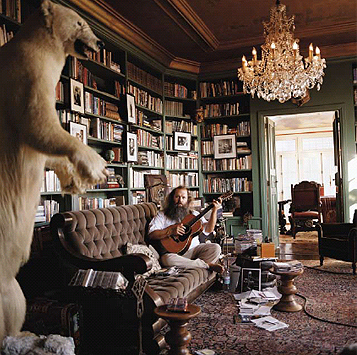
But recently facial hair has become a real statement; famous is the full unkempt Buddha beard of Rick Rubin, music industry executive at Sony. It says “even though I’m an executive I don’t have to act like one; I’m actually a laid back relaxed hippie”. The full beard has recently become more and more popular; it’s a sign of the so-called menaissance, men demanding back masculinity, the right to be a real man.

http://bumslogic.files.wordpress.com/2011/07/rick-rubin.jpg
Rick Rubin


Paradoxically in parallel at the same time body-hair is disappearing, maybe fuelled by the Philips body groomer? At least body-hair for men for the moment seems to be going through the same eradication that facial hair went through earlier. You show up with body hair in the shower after sports, then you are a not taking good care of yourself, not cultivating your body.

So the wearing of hair for men seems to have been turned upside-down, we are now going through the phase of smooth body and lots of facial hair. The question is if and when it will turn around again? The popularity of Mad Men and their neat and smooth faces together with the recent reports of the rise of the male barber salons suggests that we might be going towards taking removing facial really serious and the rebirth of the barber rituals as a moment for men to treat themselves, and recent numbers show that the barber-business is thriving in the shrinking economy.


Mad Men

F.S.C. Barber on Horatio Street in the West Village.
Joshua Bright for New York Times


One thing is for sure men are taking their appearance dead serious and the opportunity for brands to grow to really serve the genuine needs of men in this area is big, don’t forget that under all that hair there is a skin that is crying for attention and treatment too.

Published in edited form in Philips New Value News, August, in Design Trends
Related Posts Plugin for WordPress, Blogger...