The fashion system is sick and those of us that have been asking ourselves how it is possible that H&M can sell men's knitted sweaters for 20 euro, know it. Upon the first economic implosion in 2008 the fashion industry suffered, the October shows and sales-rooms where a catastrophe, serious plummeting of orders, read my post on
Reshaping Attitudes in Arnhem, where some possible scenarios for change where proposed.
Now some changes are happening for real; recently I have read about a lot of new "indie" brands that are
inter-weaving consumable fashion products with social responsibility and
care for the environment. Fashions answer to slumping markets, ethical concerns (outsourcing to 3rd world countries, sweat-shops, modern slavery, child-labor) and
environmental concerns (pollution through the whole production and
logistics chain) is
to bring the making process closer to home through local value networks.
Many of these little companies have of course been inspired by American Apparel, who was one of the first to bring production back home. Also Nukohiva by Floortje Dessing was early in starting her sustainable fashion initiative (
read my post here). American Apparel and Nukohiva are already big, these new "indie" brands/companies are independent they are not (yet) bought up by any fashion conglomerates, their business-models are different. They just do what they think is right, much of the time for very personal reasons and feelings of injustice.
I-did, slow fashion is a Utrecht fashion company, so far it's a webshop and it has one real shop in the Pastoe factory in Utrecht. Skilled emigrants work in this craft-shop, either they bring in their foreign diplomas (that are not recognized in NL) or they follow an internal MBO education of half a year to learn the basics. The fashion is quirky and not bound to seasons, there is not a seasonal new arrival, items just stay in the collection for a long time. Each item has a name-tag of the seamstress that made it. It's like the traceability known from food brought into the fashion industry, it adds a personal connection, the idea that a real human being was making this with care and love.
 |
| I-did Slow Fashion |
MMM, Mode Met een Missie, tagline; everybody deserves a second chance.
is more powered by social injustice, people that have to re-integrate into the labor market can get a chance with them. delinquents, disenfranchised, unsociable people, people with low work ethos and unschooled emigrants alike. Much of the funding for the company comes from the funds that are made available to re-integrate this kind of people. But to get out of the sphere of only being a social reintegration company they have teamed up with Claes Iversen, a young Dutch fashion designer. So social injustice and integration is getting linked to haute couture, quite a bridge to cross. But why not?
 |
| Claes Iversen for Ami-a-toi by Mode Met een Missie |
Golden Hook, knitted by French grannys
grand-mothers master the art of knitting, we all know that. Golden Hook works together with grand-mothers to create their collection of fashionable knits (ala
Wool-and-the-gang) It's a way for the pensioners to earn an extra buck in their old days. For the yarn Golden Hook works with local suppliers like sheep herds wool from Creuse, the cotton is coming from Egypt.
 |
| Golden Hook |
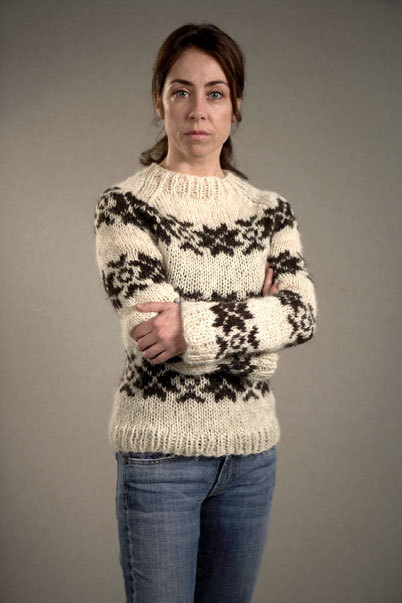
Gudrun & Gudrun, an Faeroe Island knitting company that makes use of the local population to knit re-interpreted traditional Faeroe sweaters. Both have studied and worked in Denmark and upon their return to Iceland found they had to reinvent themselves to earn a living. They work with local wool and local Faeroe women to do the knitting paying fair salaries. In order to meet demand they have expanded their knitting community to also include women from Jordan and the Baltic countries. Their presentation and style is very fashionable and professional. Once when it became known that Sara Lund from The Killing (Forbrydelsen) was always wearing a Gudrun & Gudrun sweater, then their fame really started to rise.
 |
| Sara Lund (the Killing) in her famous Gudrun Gudrun snowflake sweater |
Sløjfen, grannys from this Copenhagens activity center help produce fashionable sweaters for Henrik Vibskov and other Danish fashion designers, i.e. Mads Nørregård. The group calls themselves
Kaffeslabberasen (coffeedrinking and chatting) and that is also the title of a book that has recently been published. In the book 7 designers have designed knitwear, the 7 grannies have knit it and written the recipes.